By Kathleen Bradford, based upon characters created by E.F. Benson and expanded by Tom Holt, Guy Fraser-Sampson, and Deryck Solomon. This story takes place just after my story, Gas and Drains and the Tilling Historical Society.
Georgie Pillson was feeling pressured, and he didn't like it. He was surprised and happy after being elected as President of the Tilling Historical Society, and he hoped it would help him step out of his wife's formidable shadow. Lucia Pillson was Mayor of Tilling and as such she was also one of Tilling's magistrates; she sat on the Boards of Directors for the Hospital, the Workhouse, and the cricket and football teams. She was a member of the Parish Council, supporter of the Girl Guides, benefactress of the Church (and it's organ). But most of all, she was the queen of Tilling society, although her position as such was frequently challenged by Elizabeth Mapp-Flint. Georgie didn't begrude his wife these roles and he supported her in most of her escapades and stunts, but he had grown a bit tired of being in constant eclipse.
There were two main problems within the Historical Society which he had to address. First, there was the price of membership--each new member was expected to donate something of historical interest to the Society for its museum display. Georgie's friend Godiva Plaistow, a widow with a limited income, wanted to join but complained to Georgie that she could not afford to do so. Georgie convened a special meeting of the Society's officers, himself, the President, Mr Sturges the Curate was Vice President, Mrs Bunty Morrison was Secretary and Mr Heyne proprietor of the draper's shop, Treasurer. Georgie from the Gasworks as Member-at-Large and Sergeant-at-Arms (and tie breaker should the committee be deadlocked at two in favour, two against).
President Georgie explained the problem with the donor-membership being too expensive and keeping people who wanted to join from doing so. Mr Heyne explained that all members who paid dues were treated the same, which is as it should be [and which was beside the point]. Mrs Morrison suggested two levels of membership: a regular membership for those who paid dues, and a donor membership for those who paid dues and contributed to the Society's collection.
President Georgie explained the problem with the donor-membership being too expensive and keeping people who wanted to join from doing so. Mr Heyne explained that all members who paid dues were treated the same, which is as it should be [and which was beside the point]. Mrs Morrison suggested two levels of membership: a regular membership for those who paid dues, and a donor membership for those who paid dues and contributed to the Society's collection.
"I, myself, having a husband and the twins to look after, would prefer to be on the dues-paying side," she said.
Georgie caught on. "Yes, I see. Either Mr Sturges or Mr Heyne and I could be the donor members of the committee, and Mrs Morrison and the remaining committee members could represent the dues-paying membership. Georgie," he nodded at the Gasworks employee, "could continue to be the Member-at-Large and ensure that the votes of the donor members do not over-ride the votes of the dues-paying members. The floor is open for discussion." Lucia had instructed her husband to read Robert's Rules of Order, so that Georgie had a little knowledge of what was expected of him and of the terminology used. He personally considered Robert's Rules too hide-bound.
It was decided that Mr Pillson and Mr Heyne would represent the donor members, [and incidentally represent Tilling society and Tilling's tradesmen] while Mrs Morrison, Mr Sturges, and Georgie of the Gasworks would represent the dues-paying members.
"I'll draft a proposal and it can be presented to the voting members of the Society. Simply put, two members of the Committee will be donors, two, dues-payers, with a dues-paying Member-at-Large will be the tie-breaker in Committee votes," said Mrs Morrison, displaying the common sense and organizational skills possessed by any good housewife and mother, "And after the members vote, we can make a public announcement about it, so that people who've been put off by having to be a donor will know that they can join without that burden."
So it was added to the agenda for the next general meeting.
And then arose Georgie's second problem as President.
"But what I think we all really want to discuss, Mr President," said Mr Heyne, "Are your ideas for fund raising." The other members murmured in agreement.
“We were hoping for another feté, like you put on for the hospital,” suggested Mr Sturges.
The President replied, “I’ve considered that, and I agree that it has been too long since we've had anything like that. But I also firmly believe that for the maximum pecuniary advantage, it should be held during the summer when there are plenty of tourists. So, if you don’t mind, I’d like to table that discussion for now.”
Mr Heyne opened his mouth to protest that the Historical Society needed money now and waiting for summer was out of the question if they were to provide a decent museum display for tourists to visit before or after the feté, but Mrs Morrison, who was looking over her notes and did not notice that Mr Heyne was about to speak, stated, “Seconded.”
Well, that was easy enough, thought Georgie.
In answer to Mr Heyne’s unvoiced protestation, the President said, “Until then, we need something to tide us over, money-wise. I was thinking perhaps a fancy-dress dance on All Fool’s Day, April 1st, which fall on a Wednesday this year. I originally thought of Mardi Gras, but there won’t be enough time to prepare, since February is already upon us.” Georgie was surprised how easy it was to talk about money in the cause of charity when it was so hard to talk about money when it came to personal incomes and expenditures.
“That would be acceptable,” said the Treasurer, “But we need to gather a list of costs to see how much the Society can afford and to determine the price of tickets.”
Because he was more interested in the fancy-dress part, Georgie had not considered that there would be costs. Here the pressure began, for the Society had very little cash in its treasury. “We’ll need to make a list, and I’ll look in to the costs,” he said. Oh, no, this may be coming out of my pocket, he thought, but I do so want to make a good impression as President.” And so the list was made. Georgie’s face clouded, there was so much he had not anticipated in the way of expenses. Lucia will know what to do, but I don’t want to involve her too much—I want this to be MY show, not hers, he thought.
It was getting close to time for lunch, so the meeting was adjourned, with plans to reconvene at the same time next week.
~~~~~~~~~~
After the meeting and after a nearly-silent luncheon during which Georgie ruminated over what to do, he sat in his oak-panelled study and made more lists and wrote out his ideas.
- Rental cost of Institute
- Cost of refreshments: Canapés, Cake, Sandwiches, Tea, Punch, Liquor?
- Decorations (Heyne will provide discount)
- Dance band (Call Olga and ask for suggestions)
- Printing cost for tickets
- Price to be charged for tickets, one for members, one for non-members?
Georgie decided he would first telephone Olga Bracely, his special friend who happened to be a Prima Donna and could provide ideas for entertainment.
“Olga!? Olga, it’s me, Georgie!”
“Beloved Georgie! How are you?”
“I’ve just been elected President of the Tilling Historical Society—”
“No!”
“Yes, little old me! We want to do a fancy-dress fundraiser on April 1st, and I need to know what sort of dance band we might want, and where to find them, and what they might cost, since we don’t have very much money.”
“Am I invited?”
“Of course, we’d love to have you as our guest!”
“Good. I’ll arrange the band and bring them down with me. You’ll have to put them up overnight.”
“But, at the risk of being vulgar, what will it cost for them to play?”
“When it’s for a charitable cause, nothing is vulgar. If I can sing a few songs, there are plenty of musicians and dance bands who’ll be delighted to play for free, just so they can add me to their list of people they’ve accompanied. You take care of the accommodation and feeding of the band, and I’ll take care of the rest.”
“I knew you’d know what to do!” Georgie said, and I adore you, he added silently. He committed to memory her words, When it's for a charitable cause, nothing is vulgar.
“April 1st. I’m writing it down in the appointment book that Lucia sent me. Midweek, that’s good, most bands are booked up on weekends. I must fly, I have a rehearsal, Cortese is being quite beastly and working me to death and I love it! Send me a list of songs you’ll want the band to play! Au Reservoir!” Olga rang off.
Georgie felt he had done enough for the Tilling Historical Society for one day so he picked up his tambour and resumed his sewing, which demanded some attention but overall allowed his mind to wander. And his mind wandered mainly to Olga.
~~~~~~~~~~
“Caro, are you feeling well? You have been very quiet today,” said Lucia at dinner.
“I am quite well. Just trying to sort things out for the Historical Society,” her sposa replied.
“Tell me what you’ve planned, use me as a sounding board. It will help, just as you listen to me when I have municipal matters on my mind.”
Although he had told himself that he did not want to involve Lucia, the words came tumbling out, “Well. The Committee met today. We’ve decided to have two levels of membership, donor and dues-paying, and two Committee members will be donors and two, dues-payers, and so that the dues-paying people don’t feel run over by donors, we’ve made Gasworks Georgie, who is Member-at-Large and Sergeant-at-Arms and has the tie breaking vote, dues-paying. It will go before the membership for a vote at the next meeting.”
“Very wise, a sensible plan, it will help increase membership,” said Lucia. “But why do you seem so worried?”
“Fund-raising. I never realized how difficult it is," Georgie realized that if the dance was to be a success, and he was determined it was, he would need Lucia's help. He sent forth a silent prayer that she would help, but not take over, as she usually did. "The other members want something like your hospital feté, but I told them it would take some time to organize--setting a theme and making costumes and stage dressing--and it should be held where there are lots of tourists in town this summer,” Georgie stopped talking in order to eat some asparagus before the butter congealed upon it.
“As long as your plans are coming together, I see no problem with another feté,” said Lucia.
“The problem is that there isn’t much money in the treasury, and we’re working on having credible museum displays when the tourists begin to come.”
“Have you a contingency plan?”
“I’ve suggested, and the Committee agreed, that we have a fancy-dress dance on April 1st in order to get some income. Just a Tilling dance, not really for tourists. But there’s so much to do. I never realized how much work it is, because you always make it look so easy,” Georgie knew Lucia would like being praised for her organizational skills.
“Ah, yes, how Tilling works me. But it’s a pleasure. Is there anything I can help with?”
“I’ve talked to Olga, and she’s going to come down and sing and bring a dance band with her--she specially said she was writing it in the appointment book that you gave her,” Lucia found this gratifying. Georgie continued, “But we have to arrange for the band members to sleep over and to pay for their food,” Georgie held his breath. Lucia was rightly envious of Georgie’s relationship with Olga, and Lucia could be quite arch about it.
“See if the Trader’s Arms will give you a decreased rate for volume,” suggested Lucia, “And Olga will, of course, stay here at Mallards House. Perhaps one or two of the musicians, as well. Can she stay more than one night?” Lucia, indeed, was doing everything she could to be supportive of President Georgie. However, it did require a tremendous expenditure of self-control to keep from taking over, as she was wont to do; this is Georgie's show, stay in the background, she kept telling herself.
Georgie looked at Lucia and sighed. “I knew you’d understand! You are wonderful,” he said gratefully. “I’ll check with the Trader’s Arms tomorrow during shopping hour. And since Diva wants to join, I’ll ask her for suggestions for canapés and whether to have a large cake or individual cakes. And then there’s the question of drink. Do we serve alcoholic beverages or not? Mr Sturges suggested a ‘no-host’ bar, which surprised me since he’s the curate, where people could purchase a drink if they want one at their own expense. I’ll check with the Trader’s Arms and the Globe and see what they suggest, and if they’ll do it cheaply.” Georgie's lamb chop had grown cold while he and Lucia talked, but he liked cold lamb so he ate it with pleasure; he had not realized earlier just how hungry he truly was.
“Are you going to have attendees purchase refreshments other than drink, or provide it with the price of admission?”
“I want it on the admission price. But Mr Heyne, who’s Treasurer, wants people to pay for everything! I think that’s ungenerous, especially after they’ve already paid for tickets.”
“In fund-raising, you have to strike a balance between being generous and being overly-generous. If you charge too much, no one will want to come to your next fund-raiser; if you charge too little, you don’t raise any funds,” said Lucia, “Balance is the answer.” She paused. “And I have one concern. If you have a bar, what if someone drinks too much and causes a disturbance?”
“You mean like Major Benjy getting drunk at the Wyse’s dinner party and stopping cars in the street, saying he was police, do you not?”
“Yes. And there is a licence you must purchase in order to sell liquor, even if it is for charity. I’ll check with my Town Clerk about it tomorrow,” said Lucia.
“Oh! Another expense! I’m so glad you’re helping me with this; it’s always good to have someone with experience guide one,” said Georgie.
“I want your term as President to be a success,” said Lucia.
“The Mapp-Flints have not resigned their memberships, as Elizabeth told Diva they would. I think Elizabeth means to cause trouble, and we have to put the vote about the ‘no-host’ bar before the members. I think that may be where she starts to cause trouble.”
“It is always wise to anticipate trouble whenever Elizabeth Mapp-Flint is involved. Just be sure you have more than one plan of action,” said Lucia, who was an old hand at fighting with Elizabeth. Upon becoming the Queen of Tilling society, Lucia had taken the throne from Elizabeth, and Elizabeth was always trying to regain her kingdom.
~~~~~~~~~~
The next general meeting of the members of the Tilling Historical Society was well-attended, for everyone wanted to hear what President Pillson was planning. Attendees were not disappointed. Georgie was very nervous at the outset, but found he was appearing before a friendly audience and his anxiety lessened.
The dual-level membership was approved, and several people, including Diva Plaistow and the Bartletts, put themselves forwards as dues-paying members. Algernon and Susan Wyse applied for donor membership, with Mr Wyse bowing to the Committee and to the collective membership in turn.
Mr Wyse waved his hand to indicate he had something more to say on the matter of membership and he was duly recognized by President Pillson.
“I congratulate the Committee on their innovative and inclusive approach to membership. I do hope that I am not speaking out of turn, but in conversation with a friend who is currently a member of the Tilling Historical Society, I was encouraged to hope that the Historical Society might entertain, at some later date, a third tier of membership, that of Friend of the Tilling Historical Society, for those such as my sister the Contessa di Faraglione,” here Mr Wyse bowed to his sister, who was far away in Capri, “and the Prima Donna Olga Bracely,” he bowed in the general direction of London, “who is a dear friend of the Worshipful Mrs Pillson,” he bowed to Lucia. “There may be others, as well, who would support the endeavours of the Tilling Historical Society but are not residents of our beautiful and ancient town.” This idea was approved for Committee consideration and eventual presentation to the membership for vote.
The plan for the feté, tentatively to be held in August, was enthusiastically approved.
After acknowledging the shortage of funds for the Historical Society's displays in the Ypres Tower and the Museum, Georgie brought forth the plan for the Membership Dance, which was approved. “There are some issues regarding the Tilling Historical Society Fancy-Dress Ball that members must vote upon. First, do we charge extra for refreshments—tea and punch, and cake and biscuits—or do we include those refreshments in the cost of the tickets? Those in favour of including refreshments in the ticket price?" then Georgie asked, "Those in favour of charging extra?” The membership voted to include the refreshments in the ticket price.
“Second, it has suggested that we provide a ‘no-host’ bar. . . " Georgie paused as Major Benjy voiced a loud, "Here, here!"
". . . at which each person ordering a drink must pay for that drink themselves, separate from the ticket price," Georgie continued, "One thing against it is that if we choose to do this, we will need to purchase a licence at Town Hall. The second negative is that if we choose to do this, we will need to hire a constable to attend in order to ensure that no liquor is sold to anyone not of age and that there are no, ahem, incidents. On the pro side, the Globe Tavern has generously offered to provide a limited array of drink and to donate a share of the proceeds to the Historical Society.
“So, first we will vote on whether or not to serve alcoholic beverages. If that passes, the second vote will be upon whether to serve just beer and wine or to include a limited array of cocktails along with the beer and wine.”
Mrs Mapp-Flint was recognized by President Pillson. “I think I speak for everyone here when I say that we do not want any form of liquor, and the possible problems attendant with inebriation, at our little dance. Then we can save the expense of the licence and of paying a constable,” she said, then sat down.
“Any other comments? Yes, Mrs Wyse, as a probationary member, do please rise and offer your opinion,” said President Pillson, genially waving the gavel.
Susan Wyse, wrapped in her sable coat, with her sable muff in one hand, and her Rolls-Royce purring in the street outside, rose and said, “I do not know if I speak for anyone other than myself, and at the risk of being considered an inebriate,” there was a friendly chuckle from the audience, “I must say that I think a glass of wine or of champagne adds a great deal to my enjoyment of dancing, and I would find a wine bar most welcome.” She sat down, thinking, And I would find a more comfortable chair most welcome, as well.”
There was applause at this, and Algernon Wyse said quietly, “Well said, Susan.”
There were no other members who wanted to speak, and the voting commenced. Although many voted with Elizabeth against having liquor, the majority voted for a wine and beer bar. A small minority, including Major Benjamin Mapp-Flint, voted for cocktails as well as wine and beer.
“All right,” said President Pillson, “The membership approves provision of a limited bar serving wine and beer, and the membership approves the purchase of the licence and the hiring of a constable for the evening.” He turned to Mr Heyne, “Mr Treasurer, please take special note, as the Committee will discuss the implementation of this at our next meeting.” He turned back to the audience, “Is there any more business? No? No more business? As a reminder, the Tilling Historical Society Fancy-Dress Ball will be held on Wednesday, April 1st, and tickets will go on sale March 15th. And don’t forget, at our next meeting, Mrs Rice will present her work on the history of the teddy bear—you should attend, as you may learn that you have a valuable teddy tucked away in an attic. Mark your calendars, everyone!” Georgie smiled happily and with relief at his audience. “I declare this meeting of the Tilling Historical Society adjourned.” He looked at Mrs Morrison, who had been writing away harder than a school girl at a time-limited blue-book test, “And Mrs Secretary Morrison can give her hand a well-deserved rest!” This drew a friendly laugh as Georgie banged the gavel.
“That went well, I think, ’though I was ever so nervous,” said Georgie to Lucia as he joined her for the usual after-meeting cup of tea.
“You were splendid! You were authoritative enough to keep order but genial enough to encourage participation!” said Lucia.
Percy the Town Surveyor joined them. “I must say, when my brother nominated you, he hit the jackpot! Never seen this much interest in Tilling history! You've done the groundwork, but now the real work on the dance begins.”
"Yes," said Lucia, "And while working on the dance, we must keep the idea of the feté in mind."
Oh, dear, thought Georgie, What have I got myself into?
~~~~~~~~~~
Mayor Lucia Pillson was in Town Hall discussing arrangements for the licence with her Town Clerk when Elizabeth Mapp-Flint entered. Elizabeth stood waiting, a pensive little smile which boded no good played over her face. Lucia concluded her instructions to the Town Clerk and turned.
"Dear Elizabeth! Delighted to see you. Have you some business with the Clerk or did you want to see me?"
"Dear Worship! I want to see you, of course, if you can spare me just five minutes."
"Certainly, certainly," said Lucia.
The two ladies stepped into an empty office. Without seating herself or offering Elizabeth a seat, Lucia said briskly, "Now, Elizabeth, how may I help you?"
"It's about the Historical Society serving liquor. I believe that there is an ordinance stating that no liquor can be served within 500 feet of a church."
"There was such an ordinance, but it was voted out in 1922, dear Elizabeth, so it no longer applies."
Elizabeth was not to be put off so easily. "Also, there is a bylaw in the rules for the Institute that no liquor can be served within it's purview."
Lucia was equal to this, for it was just such matters that she had been discussing with her Town Clerk when Elizabeth arrived. "If you read further in the bylaws, you'll find that that rule was repealed in 1920 when Lord Ardingly used the Institute for a reception after the wedding of a cousin, so that, too, no longer applies."
"Dear Worship! I want to see you, of course, if you can spare me just five minutes."
"Certainly, certainly," said Lucia.
The two ladies stepped into an empty office. Without seating herself or offering Elizabeth a seat, Lucia said briskly, "Now, Elizabeth, how may I help you?"
"It's about the Historical Society serving liquor. I believe that there is an ordinance stating that no liquor can be served within 500 feet of a church."
"There was such an ordinance, but it was voted out in 1922, dear Elizabeth, so it no longer applies."
Elizabeth was not to be put off so easily. "Also, there is a bylaw in the rules for the Institute that no liquor can be served within it's purview."
Lucia was equal to this, for it was just such matters that she had been discussing with her Town Clerk when Elizabeth arrived. "If you read further in the bylaws, you'll find that that rule was repealed in 1920 when Lord Ardingly used the Institute for a reception after the wedding of a cousin, so that, too, no longer applies."
Elizabeth wreathed her face with smiles. "Dear Worship, so glad to have you to direct me in these matters," she purred.
"Any time, Elizabeth, that's what your Mayor is here for," Lucia smiled back, "I believe that's your five minutes, and I have a meeting to attend, so I'll bid you Au Reservior."
Elizabeth walked out of Town Hall fuming. She needed someone to take her frustration out on. Benjy was playing golf, so the next best victim would be Diva. Elizabeth made a beeline (or as much as a beeline as she could through Tilling's cobbled streets) for Wasters, Diva's home in the High Street.
Elizabeth rang the bell. No answer. She rang again. No answer. She rang again. The door swept open. "Steady on with my bell!" said Diva grumpily. Elizabeth swept past her into the sitting room.
"You'll never believe it," said Elizabeth dramatically.
"Never believe what?" said Diva, who was always greedy for news.
"Dear Worship using her office to ensure that the Historical Society can serve liquor."
"What's wrong with serving wine? We often have it at dinner," replied Diva.
"But at a public dance! Why, if people got drunk there could be fights, there could be a riot!"
"I doubt the Historical Society would allow it. Besides, Constable Norris will be there to stop it before it starts. And Inspector Morrison's a member."
"Surely you don't condone a drunken party which encourages disreputable behavior! This dance is not like our quiet dinners with friends. The tickets will be sold to the public and all the riff-raff of Tilling can attend!"
"Doubt it. Tickets are rather expensive, even with free refreshments. And having to pay for your own beer or wine makes it cost even more," Diva had to be careful with her shillings. Wickedly, Diva added, "No, the riff-raff of Tilling will probably be burglarizing our kitchens while we're at the Institute." She was referring to Elizabeth burglarizing Lucia's kitchen in order to obtain the recipe for Lobster a lá Riseholme; Diva paused to let this stinger sink in. "I'm looking forward to it! I've been asked to consult on the refreshments menu!"
More frustrated than ever, Elizabeth could only reply, "And have you offered them your recipe for soggy jam puffs?" as she marched out the door.
Diva slammed the door behind her, then laughed--in fact, she had been asked for, and had provided, her recipe for jam puffs to the bakery which was to supply the foods for the refreshment table. Diva thought, she who laughs last--well, Mr Georgie did pay me a consulting fee! Can't wait to see Elizabeth's face when she finds that out!
~~~~~~~~~~
The dance began to come together. A theme was chosen, Tilling's Hidden History. "That makes it easy," Georgie said, "any historical costume will do, and we don't have to bother with masks," and the Committee agreed with him.
Heyne had provided fabric for bunting at cost, glad to get it out of his storeroom after it had languished there for three years. Mrs Heyne and Mrs Worthington had volunteered to do the decorating, and silk flowers and bows decorated the bunting. The Borough Arms of Tilling was repeated throughout the decorating theme. The Institute had been thoroughly cleaned, and it's floor was waxed and polished to a high shine--but not too slippery to make dancing dangerous.
The bakery was providing jam puffs, and sliced loaf cakes, and biscuits, also at a cut rate.
The Globe had provided lager and bitters and stout on tap, and Lucia and the Wyses had donate several dozen bottles of champagne to add to the Globe's wine list for the evening.
Tickets had been printed and were selling quickly. The fire ordinance limited the number of people that the Institute could hold, so there was the added anxiety that if a person did not buy early, the tickets would be sold out.
Olga had confirmed that she was bringing half a dozen musicians down from London with her. She had embraced completely the idea of being a Friend of the Tilling Historical Society, for in this instance she was helping out her beloved friend Georgie, and not coming to the rescue of Lucia. Not only had Olga joined, but so had Cortese and his wife, and since his songs played a large part in the dance program (and because he was a little tipsy at the time), Cole Porter had purchased a Friends membership.
Poppy, Duchess of Sheffield, spoke warmly of Georgie's "dear little beard" and became a Donor, although her health kept her from attending--a lucky escape, thought Georgie, I'm fussed enough without being pursued by that woman. Adele, Lady Brixton, and Lord Tony Limpsfield had become Friends as well, but were kept from attending. And the greatest coup of all, Princess Isabel became a donor, for well she remembered meeting Georgie in Rishholme, "Ah, yes," she said when Olga approached her, "The man with the delicious apple tart!" All sent telegrams expressing their regrets at being unable to attend the Tilling Historical Society's Fancy Dress Ball.
Unbeknownst to Georgie, Lucia had gotten Stephen Merriall to promise (for a small fee) to mention the dance in his newspaper society column, written under the nom de plume "Hermione." He would not, of course, attend, but would write it up when Lucia called him and told him who was there, who regretted not being there, and who the illustrious members were.
But at the back of Georgie's mind, the thought that he had forgotten something, something important, was niggling (but not scriggling). He had his lists, everything was checked off and well in hand, and he was too busy discussing and approving everything to pay much attention to this little thought.
~~~~~~~~~
On the day of the dance, an hour before Georgie was to go to the train station to meet Olga and her dance band, a telegram arrived at Mallards House. DELAYED. MEET 7:20 TRAIN. OLGA.
Oh, dear, thought Georgie, well, the dance doesn't begin until 8:00, so there'll just be time for the band to set up.
And then that niggling little thought burst out into his conscious mind: Oh, no! I've forgotten to get myself a costume! He had been so busy arranging things that he had, indeed, forgotten his costume. There was only one thing to do, and Georgie did it:
"Foljambe! Foljambe!" he cried out, running through the house toward his bedroom.
"Yes, Sir?" Foljambe appeared from within the bedroom.
"My costume! I forgot to get myself a costume!" the anxiety of the past few weeks suddenly hit Georgie, and he was near tears. He sank down on the bed, a handkerchief in hand, mopping up perspiration and a couple of tears that slipped out. "Oh, Foljambe," he moaned, "What am I to do?"
"Your Francis Drake costume, Sir," replied Foljambe, "I got it out of mothballs last week and made sure it was all ready for you to wear."
Relief flooded Georgie's mind, "Foljambe, you are an angel! Whatever would I do without you?"
"I'm sure I don't know, Sir," she replied, "But if you have a moment to slip into the costume, we can make sure it fits properly."
"Oh, yes, Foljambe!"
~~~~~~~~~~
At 7:10, a nervous Georgie in his Sir Francis Drake costume (which fit beautifully, although the shoes were still a bit too tight) stood with Mr Wyse, dressed as a Restoration dandy in a costume of brocade, silk, lace, and a periwig, waited at the train station. Cadman with Lucia's Rolls-Royce and Drake with the Wyse's limousine of the same make, as well as Percy with his van waited as well. They were to rush Olga and the band to the Institute as soon as they arrived.

http://www.panoramio.com/photo/7797914?tag=Railway%20Station
The train arrived, Olga, already dressed as Brunnhilde alighted. What stares she had drawn from fellow passengers when she boarded the train in London! "Georgino!" she called out in her distinctive voice. "And Mr Wyse, yes, I remember meeting you the last time I was in Tilling--and were you in the audience when last I sang in Rome? No? I thought perhaps you had gotten a box with your sister the Contessa, but now I don't have to apologize for not getting to speak to you then, since it wasn't you." Olga laughed, Mr Wyse bowed.
The instruments were loaded into Percy's van, and people climbed into vehicles and they were quickly ferried to the Institute. The band knew what it was doing and set up quickly.
Cadman went back to his home to change into his Beefeater costume, then he and Foljambe (dressed as an Elizabethan merchant's wife) drove with Lucia, dressed in splendor as Elizabeth I, back to the Institute, where crowds of people waiting to get in cheered the arrival of the Queen.
Inside the Institute, people milled about greeting one another and looked over the food. At 8:00 p.m. precisely, Georgie took the stage. He tapped on the microphone. "Is it working?" he asked, and a roar from the audience told him it was. He told those gathered of the illustrious, newly-acquired Friends and Donors and he read aloud their telegrams. And then he said, "Since we're all here to dance, let us Begin the Beguine!" The band began to play.
Then, with Brunnhild on one arm and Queen Elizabeth on the other, Sir Francis Drake began to make his way through the crowd, acknowledging friends and acquaintances, admiring everyone's costumes and being admired in turn.

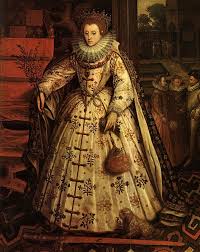
"Sir Francis! Lovely Brunnhild! And and own dear Queen Elizabeth!" said a voice behind them. Elizabeth Mapp-Flint was in Victorian dress, a banner wrapped around her, from her shoulder to her waist proclaimed, "Temperance!" on the front and "Say No to Strong Drink!" on the back. Major Benjy was wearing his old Army uniform, which was just moth-eaten enough to appear antique.
"Elizabeth! Lovely to see you!" said Lucia, "And such a dear costume! So glad you could attend my Georgie's little dance."
"I see you've chosen to be the Virgin Queen once again, dearest Lulu," replied Elizabeth with her widest smile.
"Yes, Lib-lib, but Georgie and I have made major alterations in our costumes, although if you're not versed in the fashion of that era, you may not notice them."
Olga had little patience with "that odious woman," Elizabeth Mapp-Flint, so she turned to Major Benjy. "How well you look in that uniform! Do dance with me, Major!"
Major Benjy, who had been trying to lose his wife in the crowd so that he could make his way to the bar, said heartily, "My pleasure, dear lady!" and the two disappeared into the crowd.

Mr and Mrs Wyse joined the Pillsons and Elizabeth. Both were dressed in Restoration costume and Mr Wyse was sporting a long wig in the finest Charles II style. Mrs Wyse was showing rather more décolletage than was wise, but her ample bosom was in keeping with the Restoration style of clothing. "A triumph!" declared Mr Wyse, after bowing to Lucia, Elizabeth, and Georgie in turn.
Susan Wyse hastened to agree, "Such costumes! Mr Georgie, you've replaced the lining in your slashed sleeves--so elegant!" Georgie bowed. Diva joined the group.
"Same costume as when you played Mary, Queen of Scots, I see," said Elizabeth.
Mr Wyse knew Elizabeth was being rude quite without reason. "Mrs Plaistow, if that is the same costume, how you've improved it! Astonishing!"
"Indeed, Diva, most successful," said Lucia, and Susan murmured in agreement.
"Thank you," said Diva. "I've been adding to it over the past few years, and finally got it to where I like it." And indeed she had, the gown was a wonder to behold. What was formerly a plain red gown had been embroidered with gold thread and pearls, and a cartwheel collar of delicate lace with matching cuffs had been added, as had a collar of pearls and paste gems set in gold foil. A round fan completed the costume.
A squeak announced the arrival of the Padre and Evie Bartlett. Evie exclaimed, "Diva! What wonders you've worked! That dress suits you and the Queen of Scots perfectly!"
"Aye, Mistress Plaistow! I ne'er would execute you in such a bonny costume!" said the Padre.
"Queen Mary," said Georgie with a bow and a flourish, "May I have this dance?" Diva took Georgie's arm and they also vanished into the crowd.
The Wyses and the Bartletts declared their intent to join in the dancing and they disappeared, leaving Lucia and Elizabeth together.
Lucia looked pointedly at Elizabeth's costume. It might have been found in a trunk in the attic, for it looked like it had belonged to Elizabeth's frequently-mentioned Great Aunt Caroline, or possibly even to her Grandmamma Mapp.
Before Lucia could say anything, something odd happened. A masked man dressed in a Commedia dell'Arte costume skipped up to the two ladies. His movements were odd, as if his body's center of gravity kept shifting. He made a grand obeisance and announced, "I am Tagliacarte the Fool! Mi Temperanza, I have found you! I have come to claim my dance!" He grabbed Elizabeth's hand and pulled her to the dance floor; she was too startled to resist.

http://shotgunplayers.wordpress.com/2012/06/
He spun Elizabeth onto the dance floor, pulling and pushing her, and spinning her again and again. She tried gamely to keep up but it soon became too much. She saw Benjy standing to the side, "Benjy!" she called, but he merely waved his brandy glass at her in acknowledgement. "Stop, stop!" Elizabeth told her partner.
"No, no, mi Temperanza! Che mi hai promesso un ballo! Io rivendico la mia danza!" he spun Elizabeth again. She felt giddy.
Lucia had made her way to the dance floor. She watched as the strange character spun Elizabeth around. "Irene has gone too far this time," Lucia said aloud.
"Beloved Lucia! Did you just call for me?" Quaint Irene Coles appeared next to Lucia, her pipe in hand, her costume a fisherman's slicker and rubber boots.
"If it isn't you, than who is dancing with Elizabeth?" Lucia exclaimed.
"Never seen him before," replied Irene, trying unsuccessfully to light a match on the sole of her rubber boot.
Georgie and Olga joined them. "Who's dancing with Elizabeth?" Georgie asked.
"I have no idea, he came up and grabbed her and pulled her into the dance," replied Lucia.
Suddenly the song ended. Another man dressed exactly the same costume confronted the first. "Come si permette! Temperanza, lei è mia!"
Another song began. Each man grabbed one of Elizabeth's hands and they began pulling her back and forth, spinning her. They appeared to be arguing over which man was going to dance with her. They moved her around and around, their own movements becoming more antic.
Elizabeth pulled her hands out the the men's grasps. She planted her ample weight firmly and exclaimed, "Stop!"
"Lei non danzerà! Si può avere la sua," said one man.
.jpg)
http://shotgunplayers.wordpress.com/2012/06/
"Lei è la tua Temperanza, ballare con lei," said the other.
The two men began to fight, and the dancers cleared the floor. In perfect time to the music, the men tumbled and rolled across the floor, never quite striking each other, each exclaiming, "Ballare con lei!" and "Lei è la tua Temperanza, non mio!"
Then one man went down on on knee, the other skipped up, placed one foot on the other man's knee and flipped himself through the air, landing perfectly.
The crowd began to clap, all except Elizabeth Mapp-Flint, who stood still, fuming like an active volcano. The two men ran to her and once again each grabbed her hand and pulled her back to the center of the floor. "Inchino, mi Temperanza! Inchinarsi al pubblico!" one commanded; "Bow, my Temperance, bow to the audience!" said the other. There was nothing for Elizabeth to do but bow, first to the audience, then to each man in turn. One kissed her hand. Then waving their arms about, they skipped off of the dance floor and out the door, followed by loud cheers and applause.
"Georgie!" Olga and Lucia exclaimed together, then laughed.
Lucia continued, "Georgie, did you arrange that?"
Georgie blinked. "I had nothing to do with it," he looked at Lucia and Olga in turn, "Who were those men?"
Olga gave a delicious laugh, "Never mind that! What a show!"
The rest of the evening passed without further ado. Olga sang three popular songs and people stood listening, and the applause and cheers for her was as loud as that for the clowns.
People kept congratulating Georgie on the show, and he kept saying, "I knew nothing about it. Nothing!"
At last the dance drew to a close. After most of the people had left, Evie Bartlett began to help cleaning up. "Stop, Mrs Bartlett," said Georgie, "You're a guest! There are chars who will clean up tomorrow morning," he raised his voice, "If anyone wants to take home some leftover food, please do so--it's been paid for, so don't let it go to waste!"
The Bartletts and Mrs Morrison, dressed as Florence Nightingale, and several other members of the Tilling Historical Society filled plates with leftovers before leaving. Diva, her own plate in hand, noticed Elizabeth carrying out a large plate of jam puffs; Diva stored this knowledge away for use when Elizabeth was rude about her jam puffs in the future, but right now Diva was too tired, and too happy, to think of something stinging to say.
The merry brothers, Georgie of the Gasworks and Percy the Town Surveyor began to heap biscuits and jam puffs on plates. Georgie saw that they were not in costume. They noticed Georgie watching them, "Lovely do," said one; "Enjoyed myself immensely," said the other.
"I didn't know that you knew how to speak Italian," said Georgie quietly so that the other lingering guests wouldn't hear.
Gasworks Georgie and Surveyor Percy smiled widely. "Why, President Pillson, we don't speak one word of Eye-talian, you know that!" said Percy with a wink. "Except Zingari," he added, giving the name of an opposing football team.
"Been working on that show since we were kids, never thought we'd get to perform it, but Mrs Mapp-Flint, with her Temperance ribbon and her husband in tow, was too good a target to miss," said the Gas Man.
"Now, that I understand completely!" said Georgie Pillson.
"So. What are you planning for our next do?" asked Percy.
"I'm not sure yet," replied the President, under pressure.
THE END
Note: I used Google translate for the Italian, so please forgive any mistakes.
"Any time, Elizabeth, that's what your Mayor is here for," Lucia smiled back, "I believe that's your five minutes, and I have a meeting to attend, so I'll bid you Au Reservior."
Elizabeth walked out of Town Hall fuming. She needed someone to take her frustration out on. Benjy was playing golf, so the next best victim would be Diva. Elizabeth made a beeline (or as much as a beeline as she could through Tilling's cobbled streets) for Wasters, Diva's home in the High Street.
Elizabeth rang the bell. No answer. She rang again. No answer. She rang again. The door swept open. "Steady on with my bell!" said Diva grumpily. Elizabeth swept past her into the sitting room.
"You'll never believe it," said Elizabeth dramatically.
"Never believe what?" said Diva, who was always greedy for news.
"Dear Worship using her office to ensure that the Historical Society can serve liquor."
"What's wrong with serving wine? We often have it at dinner," replied Diva.
"But at a public dance! Why, if people got drunk there could be fights, there could be a riot!"
"I doubt the Historical Society would allow it. Besides, Constable Norris will be there to stop it before it starts. And Inspector Morrison's a member."
"Surely you don't condone a drunken party which encourages disreputable behavior! This dance is not like our quiet dinners with friends. The tickets will be sold to the public and all the riff-raff of Tilling can attend!"
"Doubt it. Tickets are rather expensive, even with free refreshments. And having to pay for your own beer or wine makes it cost even more," Diva had to be careful with her shillings. Wickedly, Diva added, "No, the riff-raff of Tilling will probably be burglarizing our kitchens while we're at the Institute." She was referring to Elizabeth burglarizing Lucia's kitchen in order to obtain the recipe for Lobster a lá Riseholme; Diva paused to let this stinger sink in. "I'm looking forward to it! I've been asked to consult on the refreshments menu!"
More frustrated than ever, Elizabeth could only reply, "And have you offered them your recipe for soggy jam puffs?" as she marched out the door.
Diva slammed the door behind her, then laughed--in fact, she had been asked for, and had provided, her recipe for jam puffs to the bakery which was to supply the foods for the refreshment table. Diva thought, she who laughs last--well, Mr Georgie did pay me a consulting fee! Can't wait to see Elizabeth's face when she finds that out!
~~~~~~~~~~
The dance began to come together. A theme was chosen, Tilling's Hidden History. "That makes it easy," Georgie said, "any historical costume will do, and we don't have to bother with masks," and the Committee agreed with him.
Heyne had provided fabric for bunting at cost, glad to get it out of his storeroom after it had languished there for three years. Mrs Heyne and Mrs Worthington had volunteered to do the decorating, and silk flowers and bows decorated the bunting. The Borough Arms of Tilling was repeated throughout the decorating theme. The Institute had been thoroughly cleaned, and it's floor was waxed and polished to a high shine--but not too slippery to make dancing dangerous.
The bakery was providing jam puffs, and sliced loaf cakes, and biscuits, also at a cut rate.
The Globe had provided lager and bitters and stout on tap, and Lucia and the Wyses had donate several dozen bottles of champagne to add to the Globe's wine list for the evening.
Tickets had been printed and were selling quickly. The fire ordinance limited the number of people that the Institute could hold, so there was the added anxiety that if a person did not buy early, the tickets would be sold out.
Olga had confirmed that she was bringing half a dozen musicians down from London with her. She had embraced completely the idea of being a Friend of the Tilling Historical Society, for in this instance she was helping out her beloved friend Georgie, and not coming to the rescue of Lucia. Not only had Olga joined, but so had Cortese and his wife, and since his songs played a large part in the dance program (and because he was a little tipsy at the time), Cole Porter had purchased a Friends membership.
Poppy, Duchess of Sheffield, spoke warmly of Georgie's "dear little beard" and became a Donor, although her health kept her from attending--a lucky escape, thought Georgie, I'm fussed enough without being pursued by that woman. Adele, Lady Brixton, and Lord Tony Limpsfield had become Friends as well, but were kept from attending. And the greatest coup of all, Princess Isabel became a donor, for well she remembered meeting Georgie in Rishholme, "Ah, yes," she said when Olga approached her, "The man with the delicious apple tart!" All sent telegrams expressing their regrets at being unable to attend the Tilling Historical Society's Fancy Dress Ball.
Unbeknownst to Georgie, Lucia had gotten Stephen Merriall to promise (for a small fee) to mention the dance in his newspaper society column, written under the nom de plume "Hermione." He would not, of course, attend, but would write it up when Lucia called him and told him who was there, who regretted not being there, and who the illustrious members were.
But at the back of Georgie's mind, the thought that he had forgotten something, something important, was niggling (but not scriggling). He had his lists, everything was checked off and well in hand, and he was too busy discussing and approving everything to pay much attention to this little thought.
~~~~~~~~~
On the day of the dance, an hour before Georgie was to go to the train station to meet Olga and her dance band, a telegram arrived at Mallards House. DELAYED. MEET 7:20 TRAIN. OLGA.
Oh, dear, thought Georgie, well, the dance doesn't begin until 8:00, so there'll just be time for the band to set up.
And then that niggling little thought burst out into his conscious mind: Oh, no! I've forgotten to get myself a costume! He had been so busy arranging things that he had, indeed, forgotten his costume. There was only one thing to do, and Georgie did it:
"Foljambe! Foljambe!" he cried out, running through the house toward his bedroom.
"Yes, Sir?" Foljambe appeared from within the bedroom.
"My costume! I forgot to get myself a costume!" the anxiety of the past few weeks suddenly hit Georgie, and he was near tears. He sank down on the bed, a handkerchief in hand, mopping up perspiration and a couple of tears that slipped out. "Oh, Foljambe," he moaned, "What am I to do?"
"Your Francis Drake costume, Sir," replied Foljambe, "I got it out of mothballs last week and made sure it was all ready for you to wear."
Relief flooded Georgie's mind, "Foljambe, you are an angel! Whatever would I do without you?"
"I'm sure I don't know, Sir," she replied, "But if you have a moment to slip into the costume, we can make sure it fits properly."
"Oh, yes, Foljambe!"
~~~~~~~~~~
At 7:10, a nervous Georgie in his Sir Francis Drake costume (which fit beautifully, although the shoes were still a bit too tight) stood with Mr Wyse, dressed as a Restoration dandy in a costume of brocade, silk, lace, and a periwig, waited at the train station. Cadman with Lucia's Rolls-Royce and Drake with the Wyse's limousine of the same make, as well as Percy with his van waited as well. They were to rush Olga and the band to the Institute as soon as they arrived.
http://www.panoramio.com/photo/7797914?tag=Railway%20Station
The train arrived, Olga, already dressed as Brunnhilde alighted. What stares she had drawn from fellow passengers when she boarded the train in London! "Georgino!" she called out in her distinctive voice. "And Mr Wyse, yes, I remember meeting you the last time I was in Tilling--and were you in the audience when last I sang in Rome? No? I thought perhaps you had gotten a box with your sister the Contessa, but now I don't have to apologize for not getting to speak to you then, since it wasn't you." Olga laughed, Mr Wyse bowed.
The instruments were loaded into Percy's van, and people climbed into vehicles and they were quickly ferried to the Institute. The band knew what it was doing and set up quickly.
Cadman went back to his home to change into his Beefeater costume, then he and Foljambe (dressed as an Elizabethan merchant's wife) drove with Lucia, dressed in splendor as Elizabeth I, back to the Institute, where crowds of people waiting to get in cheered the arrival of the Queen.
Inside the Institute, people milled about greeting one another and looked over the food. At 8:00 p.m. precisely, Georgie took the stage. He tapped on the microphone. "Is it working?" he asked, and a roar from the audience told him it was. He told those gathered of the illustrious, newly-acquired Friends and Donors and he read aloud their telegrams. And then he said, "Since we're all here to dance, let us Begin the Beguine!" The band began to play.
Then, with Brunnhild on one arm and Queen Elizabeth on the other, Sir Francis Drake began to make his way through the crowd, acknowledging friends and acquaintances, admiring everyone's costumes and being admired in turn.
"Sir Francis! Lovely Brunnhild! And and own dear Queen Elizabeth!" said a voice behind them. Elizabeth Mapp-Flint was in Victorian dress, a banner wrapped around her, from her shoulder to her waist proclaimed, "Temperance!" on the front and "Say No to Strong Drink!" on the back. Major Benjy was wearing his old Army uniform, which was just moth-eaten enough to appear antique.
"Elizabeth! Lovely to see you!" said Lucia, "And such a dear costume! So glad you could attend my Georgie's little dance."
"I see you've chosen to be the Virgin Queen once again, dearest Lulu," replied Elizabeth with her widest smile.
"Yes, Lib-lib, but Georgie and I have made major alterations in our costumes, although if you're not versed in the fashion of that era, you may not notice them."
Olga had little patience with "that odious woman," Elizabeth Mapp-Flint, so she turned to Major Benjy. "How well you look in that uniform! Do dance with me, Major!"
Major Benjy, who had been trying to lose his wife in the crowd so that he could make his way to the bar, said heartily, "My pleasure, dear lady!" and the two disappeared into the crowd.
Mr and Mrs Wyse joined the Pillsons and Elizabeth. Both were dressed in Restoration costume and Mr Wyse was sporting a long wig in the finest Charles II style. Mrs Wyse was showing rather more décolletage than was wise, but her ample bosom was in keeping with the Restoration style of clothing. "A triumph!" declared Mr Wyse, after bowing to Lucia, Elizabeth, and Georgie in turn.
Susan Wyse hastened to agree, "Such costumes! Mr Georgie, you've replaced the lining in your slashed sleeves--so elegant!" Georgie bowed. Diva joined the group.
"Same costume as when you played Mary, Queen of Scots, I see," said Elizabeth.
Mr Wyse knew Elizabeth was being rude quite without reason. "Mrs Plaistow, if that is the same costume, how you've improved it! Astonishing!"
"Indeed, Diva, most successful," said Lucia, and Susan murmured in agreement.
"Thank you," said Diva. "I've been adding to it over the past few years, and finally got it to where I like it." And indeed she had, the gown was a wonder to behold. What was formerly a plain red gown had been embroidered with gold thread and pearls, and a cartwheel collar of delicate lace with matching cuffs had been added, as had a collar of pearls and paste gems set in gold foil. A round fan completed the costume.
A squeak announced the arrival of the Padre and Evie Bartlett. Evie exclaimed, "Diva! What wonders you've worked! That dress suits you and the Queen of Scots perfectly!"
"Aye, Mistress Plaistow! I ne'er would execute you in such a bonny costume!" said the Padre.
"Queen Mary," said Georgie with a bow and a flourish, "May I have this dance?" Diva took Georgie's arm and they also vanished into the crowd.
The Wyses and the Bartletts declared their intent to join in the dancing and they disappeared, leaving Lucia and Elizabeth together.
Lucia looked pointedly at Elizabeth's costume. It might have been found in a trunk in the attic, for it looked like it had belonged to Elizabeth's frequently-mentioned Great Aunt Caroline, or possibly even to her Grandmamma Mapp.
Before Lucia could say anything, something odd happened. A masked man dressed in a Commedia dell'Arte costume skipped up to the two ladies. His movements were odd, as if his body's center of gravity kept shifting. He made a grand obeisance and announced, "I am Tagliacarte the Fool! Mi Temperanza, I have found you! I have come to claim my dance!" He grabbed Elizabeth's hand and pulled her to the dance floor; she was too startled to resist.
http://shotgunplayers.wordpress.com/2012/06/
He spun Elizabeth onto the dance floor, pulling and pushing her, and spinning her again and again. She tried gamely to keep up but it soon became too much. She saw Benjy standing to the side, "Benjy!" she called, but he merely waved his brandy glass at her in acknowledgement. "Stop, stop!" Elizabeth told her partner.
"No, no, mi Temperanza! Che mi hai promesso un ballo! Io rivendico la mia danza!" he spun Elizabeth again. She felt giddy.
Lucia had made her way to the dance floor. She watched as the strange character spun Elizabeth around. "Irene has gone too far this time," Lucia said aloud.
"Beloved Lucia! Did you just call for me?" Quaint Irene Coles appeared next to Lucia, her pipe in hand, her costume a fisherman's slicker and rubber boots.
"If it isn't you, than who is dancing with Elizabeth?" Lucia exclaimed.
"Never seen him before," replied Irene, trying unsuccessfully to light a match on the sole of her rubber boot.
Georgie and Olga joined them. "Who's dancing with Elizabeth?" Georgie asked.
"I have no idea, he came up and grabbed her and pulled her into the dance," replied Lucia.
Suddenly the song ended. Another man dressed exactly the same costume confronted the first. "Come si permette! Temperanza, lei è mia!"
Another song began. Each man grabbed one of Elizabeth's hands and they began pulling her back and forth, spinning her. They appeared to be arguing over which man was going to dance with her. They moved her around and around, their own movements becoming more antic.
Elizabeth pulled her hands out the the men's grasps. She planted her ample weight firmly and exclaimed, "Stop!"
"Lei non danzerà! Si può avere la sua," said one man.
http://shotgunplayers.wordpress.com/2012/06/
"Lei è la tua Temperanza, ballare con lei," said the other.
The two men began to fight, and the dancers cleared the floor. In perfect time to the music, the men tumbled and rolled across the floor, never quite striking each other, each exclaiming, "Ballare con lei!" and "Lei è la tua Temperanza, non mio!"
Then one man went down on on knee, the other skipped up, placed one foot on the other man's knee and flipped himself through the air, landing perfectly.
The crowd began to clap, all except Elizabeth Mapp-Flint, who stood still, fuming like an active volcano. The two men ran to her and once again each grabbed her hand and pulled her back to the center of the floor. "Inchino, mi Temperanza! Inchinarsi al pubblico!" one commanded; "Bow, my Temperance, bow to the audience!" said the other. There was nothing for Elizabeth to do but bow, first to the audience, then to each man in turn. One kissed her hand. Then waving their arms about, they skipped off of the dance floor and out the door, followed by loud cheers and applause.
"Georgie!" Olga and Lucia exclaimed together, then laughed.
Lucia continued, "Georgie, did you arrange that?"
Georgie blinked. "I had nothing to do with it," he looked at Lucia and Olga in turn, "Who were those men?"
Olga gave a delicious laugh, "Never mind that! What a show!"
The rest of the evening passed without further ado. Olga sang three popular songs and people stood listening, and the applause and cheers for her was as loud as that for the clowns.
People kept congratulating Georgie on the show, and he kept saying, "I knew nothing about it. Nothing!"
At last the dance drew to a close. After most of the people had left, Evie Bartlett began to help cleaning up. "Stop, Mrs Bartlett," said Georgie, "You're a guest! There are chars who will clean up tomorrow morning," he raised his voice, "If anyone wants to take home some leftover food, please do so--it's been paid for, so don't let it go to waste!"
The Bartletts and Mrs Morrison, dressed as Florence Nightingale, and several other members of the Tilling Historical Society filled plates with leftovers before leaving. Diva, her own plate in hand, noticed Elizabeth carrying out a large plate of jam puffs; Diva stored this knowledge away for use when Elizabeth was rude about her jam puffs in the future, but right now Diva was too tired, and too happy, to think of something stinging to say.
The merry brothers, Georgie of the Gasworks and Percy the Town Surveyor began to heap biscuits and jam puffs on plates. Georgie saw that they were not in costume. They noticed Georgie watching them, "Lovely do," said one; "Enjoyed myself immensely," said the other.
"I didn't know that you knew how to speak Italian," said Georgie quietly so that the other lingering guests wouldn't hear.
Gasworks Georgie and Surveyor Percy smiled widely. "Why, President Pillson, we don't speak one word of Eye-talian, you know that!" said Percy with a wink. "Except Zingari," he added, giving the name of an opposing football team.
"Been working on that show since we were kids, never thought we'd get to perform it, but Mrs Mapp-Flint, with her Temperance ribbon and her husband in tow, was too good a target to miss," said the Gas Man.
"Now, that I understand completely!" said Georgie Pillson.
"So. What are you planning for our next do?" asked Percy.
"I'm not sure yet," replied the President, under pressure.
THE END
Note: I used Google translate for the Italian, so please forgive any mistakes.


